
Fructose Market: Rising Demand for Natural Sweeteners in Food and Beverage Applications
As consumers become increasingly health-conscious, the global food industry is shifting toward alternative sweeteners that offer improved taste, functionality, and versatility. Among these, fructose has emerged as a widely used ingredient in beverages, processed foods, bakery products, dairy items, and confectionery due to its high sweetness and lower glycemic index compared to conventional table sugar.
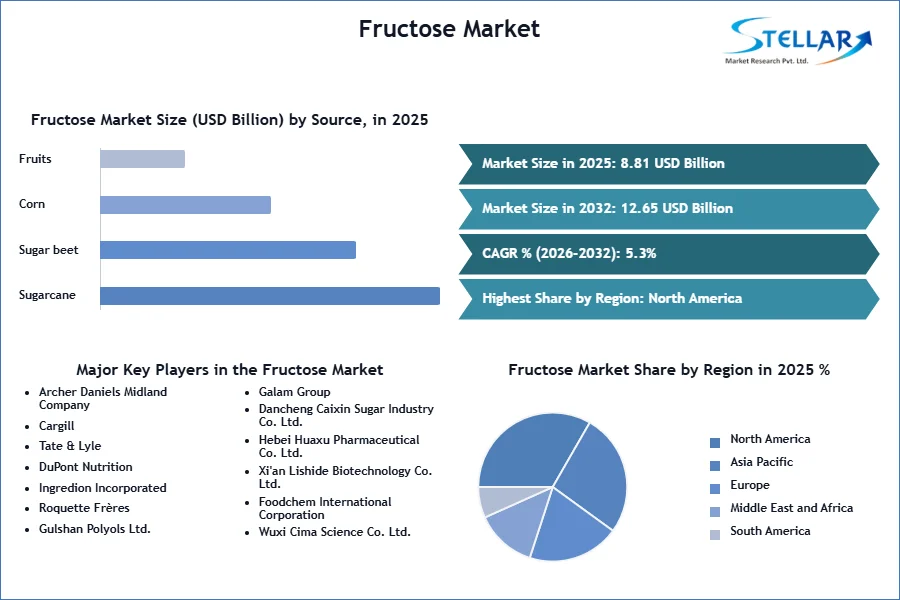
The growing popularity of low-sugar foods, clean-label ingredients, and healthier product formulations is creating significant growth opportunities for the global Fructose Market. According to Stellar Market Research, the market was valued at USD 7.55 billion in 2024 and is expected to reach USD 11.41 billion by 2032, expanding at a CAGR of 5.3% during 2025–2032.
- What is Fructose?
- 1. Rising Demand for Sugar Alternatives
- 2. Growing Food and Beverage Industry
- 3. Increasing Preference for Clean-Label Products
- 4. Expanding Functional Food Market
- High Fructose Corn Syrup (HFCS)
- Crystalline Fructose
- Fructose Syrups
- Food & Beverage
- Pharmaceutical Industry
- Nutraceuticals
- Household Consumption
- Low-Sugar Product Innovation
- Natural Ingredient Preference
- Growth of Functional Beverages
- Product Reformulation
What is Fructose?
Fructose is a naturally occurring simple sugar found in fruits, vegetables, and honey. It is commonly used as a sweetener in the food and beverage industry because it provides greater sweetness than glucose and sucrose while enhancing texture, flavor, and moisture retention.
Commercial fructose products include:
- High Fructose Corn Syrup (HFCS)
- Crystalline Fructose
- Fructose Syrups
These ingredients are widely used in processed foods, soft drinks, sports beverages, dairy products, bakery products, jams, sauces, and nutritional supplements.
Key Factors Driving the Fructose Market
1. Rising Demand for Sugar Alternatives
Consumers are actively reducing refined sugar consumption due to growing awareness of obesity, diabetes, and lifestyle-related diseases. Food manufacturers are therefore incorporating alternative sweeteners like fructose into various product formulations.
The increasing availability of reduced-sugar and low-calorie products is supporting market expansion.
2. Growing Food and Beverage Industry
The food and beverage sector remains the largest consumer of fructose.
Fructose is widely used in:
- Carbonated beverages
- Fruit juices
- Bakery products
- Dairy desserts
- Confectionery
- Breakfast cereals
- Energy drinks
Its ability to improve sweetness while maintaining product stability makes it an attractive ingredient for manufacturers.
3. Increasing Preference for Clean-Label Products
Consumers are paying closer attention to ingredient labels and prefer products made with recognizable ingredients.
The growing clean-label movement has encouraged manufacturers to develop products with naturally derived sweeteners, supporting demand for fructose in selected applications.
4. Expanding Functional Food Market
The popularity of functional foods and nutritional beverages continues to increase globally.
Manufacturers are incorporating fructose into health drinks, protein beverages, nutritional bars, and specialized dietary products because of its sweetness and formulation flexibility.
𝐃𝐨𝐰𝐧𝐥𝐨𝐚𝐝 𝐅𝐫𝐞𝐞 𝐏𝐃𝐅 𝐁𝐫𝐨𝐜𝐡𝐮𝐫𝐞: https://www.stellarmr.com/report/req_sample/Fructose-Market/1985
Major Types of Fructose Products
High Fructose Corn Syrup (HFCS)
HFCS is one of the most widely used fructose-based sweeteners in processed foods and beverages.
Its advantages include:
- Consistent sweetness
- Easy blending
- Long shelf life
- Cost-effective production
HFCS is commonly used in soft drinks, sauces, baked goods, and processed foods.
Crystalline Fructose
Crystalline fructose offers higher sweetness than conventional sugar and is widely used in premium food products, beverages, and pharmaceutical formulations.
It provides excellent moisture retention and improves flavor intensity.
Fructose Syrups
Fructose syrups are commonly used in liquid food applications where smooth mixing and stable sweetness are required.
Applications Across Industries
Food & Beverage
This remains the largest application segment.
Common uses include:
- Soft drinks
- Fruit beverages
- Bakery products
- Ice cream
- Yogurt
- Confectionery
- Jams and preserves
Pharmaceutical Industry
Fructose is used in selected pharmaceutical formulations to improve taste and enhance patient acceptance of liquid medicines.
Nutraceuticals
Sports nutrition and dietary supplement manufacturers increasingly use fructose in energy products and functional beverages.
Household Consumption
Consumers also use crystalline fructose in home cooking, baking, and specialty diets where alternative sweeteners are preferred.
Emerging Market Trends
Low-Sugar Product Innovation
Food manufacturers continue developing products with reduced sugar content while maintaining sweetness and flavor through advanced sweetener formulations.
Natural Ingredient Preference
Consumers increasingly favor naturally sourced ingredients, encouraging companies to incorporate fruit-derived sweeteners and cleaner ingredient lists.
Growth of Functional Beverages
Energy drinks, sports beverages, and wellness drinks continue to expand globally, creating additional demand for fructose-based sweeteners.
Product Reformulation
Manufacturers are reformulating traditional food products to reduce sugar content while maintaining taste and texture, supporting broader adoption of fructose in selected formulations.
Challenges Facing the Market
Despite positive growth prospects, the market faces several challenges.
Health Concerns
Excessive consumption of added sugars, including fructose-containing sweeteners, has been associated with potential health concerns. This has encouraged manufacturers to balance sweetness with healthier formulations and transparent labeling.
Regulatory Requirements
Governments worldwide are implementing stricter food labeling regulations and encouraging reduced sugar consumption, requiring manufacturers to carefully manage ingredient usage.
Competition from Alternative Sweeteners
Fructose competes with several other sweetening options, including stevia, monk fruit, erythritol, and other low-calorie sweeteners.
Future Opportunities
The Fructose Market is expected to benefit from several long-term trends:
- Growing demand for healthier processed foods
- Expansion of functional beverages
- Increasing production of low-sugar confectionery
- Innovation in clean-label food products
- Rising consumption of sports nutrition products
- Expansion of food processing industries in emerging economies
Asia-Pacific is expected to witness strong market growth due to rising urbanization, increasing disposable incomes, expanding food manufacturing, and changing consumer dietary preferences.
𝐃𝐨𝐰𝐧𝐥𝐨𝐚𝐝 𝐅𝐫𝐞𝐞 𝐏𝐃𝐅 𝐁𝐫𝐨𝐜𝐡𝐮𝐫𝐞: https://www.stellarmr.com/report/req_sample/Fructose-Market/1985
Conclusion
The Fructose Market continues to expand as food manufacturers respond to evolving consumer preferences for healthier, lower-sugar, and clean-label products. Growing applications across beverages, bakery, dairy, confectionery, and nutritional products are supporting steady market growth.
With ongoing innovation in food formulations, increasing demand for functional ingredients, and expansion of the global processed food industry, fructose is expected to remain an important sweetening solution for manufacturers seeking to balance taste, functionality, and consumer expectations.