
Key Highlights
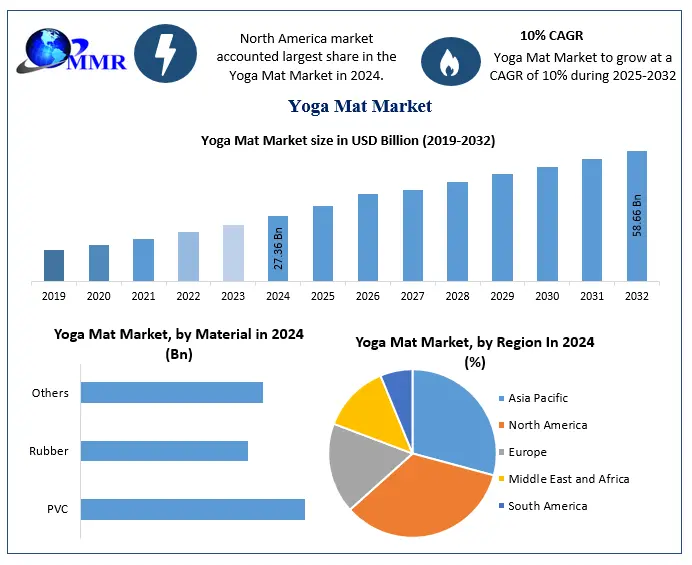
- The Yoga Mat Market was valued at USD 27.36 Billion in 2024 and is projected to reach USD 58.66 Billion by 2032, expanding at a 10% CAGR. This rapid growth highlights the increasing commercialization of global wellness and fitness trends.
- Rising participation in yoga, Pilates, and home fitness continues driving product demand.
- Sustainable materials and environmentally responsible manufacturing are becoming major purchasing factors.
- E-commerce platforms continue expanding market accessibility and accelerating direct-to-consumer sales.
- Premium product innovation centered on comfort, durability, portability, and performance is strengthening competitive differentiation.
Why This Matters Now
The wellness economy is reshaping consumer spending faster than many traditional fitness categories. Brands that fail to align with sustainability, premium quality, and digital engagement risk losing market share as consumers increasingly view fitness products as lifestyle investments.
The Yoga Mat Market reached USD 27.36 Billion in 2024 and is expected to grow to USD 58.66 Billion by 2032 at a 10% CAGR. That strong expansion signals sustained investment opportunities across fitness accessories, premium wellness products, and omnichannel retail.
Market Overview
Yoga mats have evolved from basic exercise accessories into premium wellness products. Consumers increasingly demand products that deliver superior grip, cushioning, durability, hygiene, and environmental responsibility while complementing modern lifestyles.
The category now serves a broad customer base extending beyond yoga practitioners to include Pilates participants, fitness enthusiasts, rehabilitation users, meditation practitioners, and home workout consumers. This diversification continues expanding addressable market opportunities.
Manufacturers are responding with wider product portfolios featuring lightweight construction, advanced cushioning technologies, premium surface materials, and aesthetically differentiated designs that appeal to both professional and recreational users.
Key Trends Driving Growth
Global wellness awareness continues driving yoga participation across multiple age groups. Consumers increasingly prioritize physical fitness, stress management, flexibility, and mental well-being, strengthening long-term demand for yoga accessories.
Home fitness remains an important structural trend. Consumers continue investing in personal workout equipment that supports flexible exercise routines without requiring gym memberships.
Sustainability has become a major competitive differentiator. Eco-friendly materials, recyclable components, and responsible manufacturing practices increasingly influence purchasing decisions among environmentally conscious consumers.
Digital commerce continues reshaping product discovery and purchasing behavior. Online platforms provide broader product selection, educational content, influencer marketing, and customer reviews that strengthen purchasing confidence while enabling global market expansion.
Segment Insights
- Dominant Segment: According to the Maximize Market Research report, the dominant segment continues contributing the largest market share through broad consumer adoption and strong demand across fitness and wellness applications.
- Fastest-Growing Segment: The report identifies the fastest-growing segment as expanding rapidly due to increasing consumer preference for premium, sustainable, and performance-oriented yoga accessories.
- Premium product innovation continues strengthening competitive positioning.
- Eco-friendly material development remains a major focus across new product launches.
- Digital retail continues supporting rapid global market expansion.
Regional Growth Story
Regional demand reflects differences in wellness culture, fitness participation, disposable income, and digital retail maturity.
Developed markets continue leading premium product adoption through established fitness ecosystems and higher consumer spending on wellness products. Consumers increasingly prioritize product quality, sustainability, and brand credibility.
Emerging markets present substantial growth opportunities as urbanization, rising health awareness, and expanding middle-class populations accelerate participation in yoga and home fitness activities. Manufacturers continue strengthening regional partnerships and digital distribution strategies to capitalize on these opportunities.
These regional shifts suggest future market leadership will increasingly depend on localized branding, sustainable product development, and omnichannel consumer engagement.
Competitive Landscape
Competition has shifted beyond manufacturing efficiency toward lifestyle branding and innovation. Companies increasingly compete through premium materials, ergonomic product design, sustainable sourcing, and digital consumer experiences.
This strategic evolution signals rising barriers to entry. Brands investing in research, environmentally responsible materials, and direct-to-consumer business models are strengthening customer loyalty while improving pricing power.
Over the next 12–24 months, competition is expected to intensify around premium product positioning, sustainable manufacturing, influencer-led marketing, and personalized customer experiences. Manufacturers competing solely on price may find it increasingly difficult to differentiate.
Recent Developments
- Manufacturers continue expanding eco-friendly yoga mat portfolios using sustainable materials.
- Product innovation remains focused on enhanced grip, durability, portability, and comfort.
- E-commerce continues increasing consumer access to premium wellness products.
- Companies are strengthening premium branding through design innovation and product customization.
- Sustainability initiatives continue shaping product development and manufacturing strategies.
Strategic Implications
Yoga mats increasingly represent lifestyle products rather than simple fitness accessories. Manufacturers capable of combining sustainable materials, premium functionality, and strong digital branding can strengthen long-term customer loyalty and profitability.
Retailers also benefit from expanding wellness portfolios through higher-value transactions, repeat purchases, and cross-selling opportunities across complementary fitness products.
For investors, the market demonstrates strong long-term growth potential supported by structural shifts in wellness, preventive healthcare, and home fitness participation.
Future Outlook
The Yoga Mat Market is expected to maintain robust expansion through 2032 as wellness awareness, home fitness adoption, sustainable manufacturing, and digital retail continue transforming global consumer purchasing behavior.
Future competitive leadership will increasingly depend on product innovation, sustainable materials, premium customer experiences, and omnichannel distribution rather than manufacturing scale alone.
Manufacturers investing today in sustainable innovation and wellness-focused branding will define tomorrow’s fitness accessories market, while those relying on commodity products risk losing both pricing power and consumer loyalty.
Analyst Perspective
“The Yoga Mat Market is evolving into a premium wellness category where sustainability, product innovation, and consumer experience increasingly determine competitive success. Companies aligning product development with long-term wellness trends will be best positioned to capture sustained global growth.” — Siddhi Dole, Analyst
About Maximize Market Research
Maximize Market Research Pvt. Ltd. (MMR) is a global market research and consulting company that provides reliable, data-focused, and practical business insights. The firm serves a wide range of industries, including healthcare, pharmaceuticals, technology, automotive, electronics, chemicals, personal care, and consumer goods. Through market forecasts, competitive analysis, strategic consulting, and industry impact assessments, MMR helps organizations understand changing market conditions, identify growth opportunities, and make informed business decisions for long-term success.
2nd Floor, Navale IT Park Phase 3
Pune Banglore Highway, Narhe
Pune, Maharashtra 411041, India
+91 9607365656
[email protected]