
Cockpit display systems form the visual interface backbone for modern platforms, consolidating critical operational data including navigation, flight controls, systems monitoring, and situational awareness into intuitive screen configurations. As commercial transportation, military aviation, and advanced automotive designs accelerate their shift toward digital architectures, the demand for sophisticated human-machine interfaces (HMIs) has experienced a sharp upward trajectory.
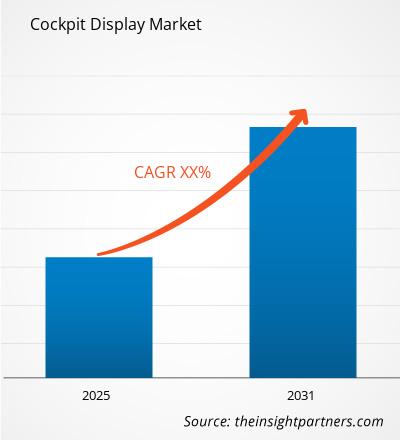
The global Cockpit Display Market size is expected to reach US$ 15.68 Billion by 2034 from US$ 9.00 Billion in 2025. The market is anticipated to register a CAGR of 6.36% during the forecast period 2026–2034.
Key Market Drivers and Growth Determinants
Several structural factors are accelerating the transformation of the cockpit display ecosystem across sectors:
Transition from Analog to All-Glass Cockpits:- Operators across commercial aviation, automotive platforms, and defense platforms are actively replacing traditional mechanical gauges and analog instruments with high-resolution digital screen configurations. Integrated primary flight displays (PFDs), multi-function displays (MFDs), and high-contrast digital instrument clusters significantly reduce physical clutter while reducing operator cognitive load.
Advancements in Display Panel Technologies:- The progressive adoption of advanced display panel technologies transitioning from traditional Thin-Film Transistor Liquid Crystal Displays (TFT-LCDs) to Organic Light-Emitting Diodes (OLED) and Mini-LED technology has vastly improved visual clarity. These technologies offer high dynamic contrast, wide viewing angles, lower power consumption, and enhanced sunlight readability essential for harsh, variable lighting conditions.
Integration of Augmented Reality and Head-Up Displays (HUDs):- Safety mandates and tactical operating requirements are fueling the integration of Head-Up Displays (HUDs) and Augmented Reality (AR) visual overlays. By projecting mission-critical telemetry, navigation vectors, and hazard warnings directly into the driver’s or pilot’s line of sight, these systems streamline reaction times and drastically bolster operational situational awareness.
Fleet Modernization and Defense Programs:- A continuous cycle of commercial aircraft orders combined with extensive military fleet upgrades has created sustained demand for high-durability, mission-tested cockpit displays. Defense organizations prioritize ruggedized units equipped with night-vision compatibility, vibration resistance, and specialized thermal management capabilities.
Get a PDF Sample- https://www.theinsightpartners.com/sample/TIPRE00012237
Competitive Landscape & Key Players
The global cockpit display market features a high degree of technological innovation and market concentration, with leading technology providers investing heavily in research and development to meet strict regulatory and safety standards. Prominent companies operating in the global market include:
Alpine Electronics, Inc.
AU Optronics Corp.
Continental AG
Esterline Technologies Corp.
Garmin Ltd.
General Dynamics Canada Ltd.
Innolux Corp.
Japan Display Inc.
Rockwell Collins, Inc.
Texas Instruments Inc.
These market leaders continue to focus on strategic alliances, product launches, hardware customization, and weight-reduction strategies to secure major platform contracts across commercial, defense, and automotive sectors.
Get Full Copy of This Report- https://www.theinsightpartners.com/buy/TIPRE00012237
Future Outlook
The future of the Cockpit Display market will be defined by the seamless convergence of artificial intelligence, intuitive touch and gesture controls, and flexible screen form factors. As AI-enabled predictive analytics become standard in smart cockpits, display hardware will increasingly evolve to render real-time situational processing and automated alerts in high-definition 4K visual environments. Furthermore, the continuous miniaturization of display processing units, alongside the growing adoption of curved OLED and tactile haptic feedback screens, will set new standards for design ergonomics and system integration. Over the coming decade, manufacturers that prioritize modular software compatibility, lightweight materials, and enhanced environmental ruggedization will be exceptionally well-positioned to capitalize on global fleet retrofits and next-generation autonomous vehicle platforms.
Related Reports-
About Us
The Insight Partners is a one-stop industry research provider of actionable intelligence. We help our clients in getting solutions to their research requirements through our syndicated and consulting research services. We specialize in industries such as Semiconductor and Electronics, Aerospace and Defense, Automotive and Transportation, Biotechnology, Healthcare IT, Manufacturing and Construction, Medical Devices, Technology, Media, and Telecommunications, as well as chemicals and Materials.