
The global commercial vehicle climate control system market is undergoing a significant transformation driven by rapid industrialization, expanding logistics networks, and stricter regulatory frameworks surrounding driver comfort and emissions. Climate control systems encompassing heating, ventilation, and air conditioning (HVAC) have evolved from basic cabin amenities into critical technological assets that directly influence operator productivity, vehicle safety, and thermal management for both internal combustion and electrified commercial fleets.
Market Size and Growth Trajectory
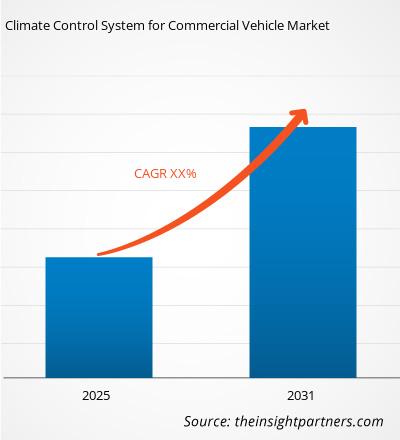
According to recent market intelligence, the global Climate Control System For Commercial Vehicle Market size is projected to reach US$ 25.48 Billion by 2034 from US$ 17.57 Billion in 2025. The market is anticipated to register a CAGR of 10.2% during the forecast period 2026–2034.
This robust growth is backed by rising fleet usage across long-haul transportation, urban delivery services, passenger transit, and heavy construction equipment. As logistics providers focus on reducing driver fatigue and enhancing operational efficiency, integrating reliable and intelligent climate control systems has become a priority for commercial vehicle Original Equipment Manufacturers (OEMs).
Key Market Drivers and Technological Dynamics
Several macro and industry-specific factors are accelerating market adoption:
Electrification of Commercial Fleets: The global transition toward electric buses, light commercial vehicles (LCVs), and heavy-duty electric trucks requires advanced thermal management solutions. Unlike traditional vehicles that utilize engine waste heat for cabin warming, electric commercial vehicles rely on high-efficiency heat pumps and integrated thermal management systems to regulate cabin temperatures without significantly compromising driving range.
Stringent Driver Safety and Comfort Regulations: Transport authorities across major regions including North America, Europe, and Asia-Pacific are continuously implementing updated safety standards. Regulating ergonomic conditions, noise levels, and interior cabin air quality plays a key role in minimizing driver fatigue, reducing accident rates on long routes, and maintaining productivity.
Logistics Expansion and Fleet Modernization: The rapid expansion of e-commerce, cold-chain logistics, and cross-border trade has surged demand for medium and heavy commercial vehicles. Fleet operators are increasingly opting for modern HVAC units equipped with smart climate controls, multi-zone temperature settings, and remote monitoring capabilities to minimize maintenance downtime and lower overall cost of ownership.
Focus on Energy Efficiency and Green Refrigerants: Market players are investing heavily in eco-friendly refrigerants with low Global Warming Potential (GWP), such as R1234yf and natural refrigerants like R744 (CO2). Modern climate control architectures feature variable-displacement compressors and brushless DC motors to reduce energy consumption and meet global environmental standards.
Get a PDF Sample– https://www.theinsightpartners.com/sample/TIPRE00017112
Regional Landscape
Asia-Pacific: Represents one of the fastest-growing regions, driven by heavy investment in commercial vehicle production in countries like China, India, and Japan. Rapid urban expansion, booming logistics operations, and government policies favoring fleet electrification fuel regional growth.
North America: A mature market characterized by high adoption rates of advanced long-haul trucks, strict driver comfort norms, and continuous innovation in fleet telematics integrated with HVAC systems.
Europe: Leads in adopting stringent emissions directives and zero-emission commercial vehicles. European manufacturers are heavily focused on developing highly integrated heat pump systems and sustainable refrigerants for electric and hybrid commercial transport.
Key Market Players
The global commercial vehicle climate control market features a mix of established automotive suppliers and specialized thermal management developers driving technology adoption through strategic partnerships, capacity expansion, and R&D investments. Key players operating in the market include:
DENSO CORPORATION
Eberspächer Climate Control Systems GmbH
Hanon Systems
Mahle GmbH
Mobile Climate Control
Red Dot Corporation
SANDEN HOLDINGS CORPORATION
Valeo S.A.
Wabco
Webasto Thermo and Comfort
Get Full Copy of This Report- https://www.theinsightpartners.com/buy/TIPRE00017112
Future Outlook
The future of the commercial vehicle climate control system market will be defined by deep integration, smart automation, and energy optimization. As autonomous and connected commercial vehicles move closer to widespread deployment, climate control units will increasingly interface with vehicle central processing units (ECUs) and IoT telematics to optimize heating and cooling dynamically based on route profiles, weather forecasts, and cabin occupancy. Furthermore, the transition toward hydrogen fuel cell and battery-electric fleets will shift thermal management from standalone cabin cooling into holistic systems that manage battery temperature, power electronics, and passenger comfort simultaneously. Over the coming decade, suppliers capable of delivering compact, lightweight, highly efficient, and low-GWP thermal control solutions will be best positioned to capture growing market share in the evolving commercial transport landscape.
Related Reports-
Commercial Vehicle Exhaust Brake Market
Electric Light Commercial Vehicle Market
Commercial Vehicle Active Power Steering System Market
About Us
The Insight Partners is a one-stop industry research provider of actionable intelligence. We help our clients in getting solutions to their research requirements through our syndicated and consulting research services. We specialize in industries such as Semiconductor and Electronics, Aerospace and Defense, Automotive and Transportation, Biotechnology, Healthcare IT, Manufacturing and Construction, Medical Devices, Technology, Media, and Telecommunications, as well as chemicals and Materials.