
Key Highlights
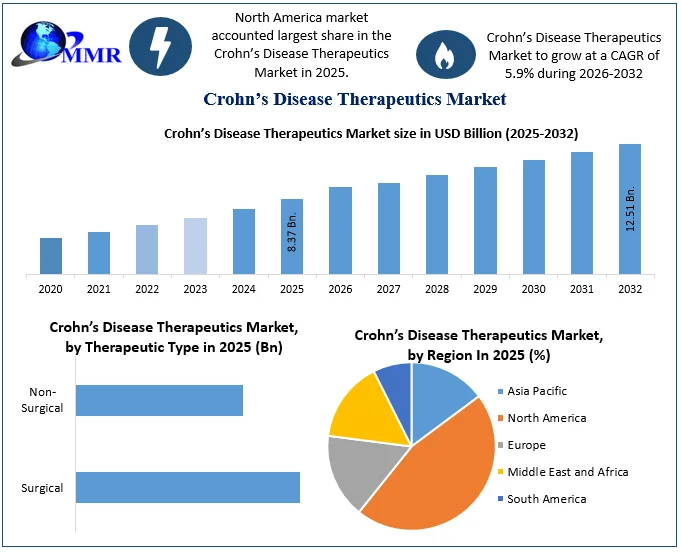
- The Crohn’s Disease Therapeutics Market was valued at USD 9.99 billion in 2023 and is expected to reach USD 14.89 billion by 2030, growing at a CAGR of 5.8% during 2024–2030.
- Increasing demand for advanced therapies is supporting market expansion as healthcare providers focus on disease control and patient outcomes.
- The Biologics segment dominated the market in 2023 due to strong adoption of targeted treatment approaches.
- North America held the largest market share due to advanced healthcare infrastructure, treatment availability, and pharmaceutical innovation.
Why This Matters Now
Healthcare providers and pharmaceutical companies are facing increasing pressure to improve long-term management of Crohn’s disease while addressing complex treatment needs. The Crohn’s Disease Therapeutics Market is gaining strategic importance as advanced therapies reshape how inflammatory bowel disease is treated.
The shift from symptom management toward targeted disease control is changing competition across pharma and biotech. Companies developing effective, accessible, and clinically validated therapies are positioned to influence the next stage of gastrointestinal healthcare.
Market Overview
The Crohn’s Disease Therapeutics Market includes medications and treatment solutions designed to manage Crohn’s disease, a chronic inflammatory condition affecting the gastrointestinal tract. Treatment options include biologics, conventional therapies, and newer targeted approaches developed to reduce inflammation and improve patient quality of life.
The market is supported by growing awareness, improved diagnosis, and increasing adoption of advanced treatments. Healthcare systems are focusing on therapies that can help manage disease progression and reduce complications.
Pharmaceutical innovation is a major market factor. Biologic therapies and targeted medicines have expanded treatment options for patients who require more specialized approaches. This has increased competition among drug developers focused on inflammatory and immune-related diseases.
The market also faces challenges related to treatment costs, reimbursement access, and long-term therapy management. Healthcare providers and payers continue evaluating the balance between clinical benefits and affordability.
Key Trends Driving Growth
Biologic therapy adoption is one of the strongest growth drivers. Targeted treatments have changed the management approach for Crohn’s disease by offering alternatives for patients who require advanced care strategies.
Pharmaceutical companies are increasing investment in inflammatory bowel disease research. Drug development programs are focused on improving treatment effectiveness, reducing disease activity, and expanding therapeutic choices.
Precision medicine is influencing future treatment strategies. Advances in understanding disease mechanisms are supporting research into more personalized approaches. While the MMR report highlights therapeutic innovation, specific AI integration or precision medicine adoption data is not provided.
Clinical research activity is creating new opportunities. The development of innovative therapies and improved treatment pathways is encouraging pharmaceutical and biotechnology companies to expand their gastrointestinal disease portfolios.
Healthcare infrastructure improvements are also supporting market growth. Better diagnostic capabilities and specialist care access allow more patients to receive appropriate treatment.
Request a Free Sample Copy or View Report Summary
Segment Insights
- Dominant Segment: Biologics
The Biologics segment held the largest market share in 2023. Strong adoption is driven by increasing use of advanced therapies for managing moderate to severe Crohn’s disease. - Fastest-Growing Segment: Biologics
The segment continues to grow as healthcare providers increasingly use targeted therapies and pharmaceutical companies expand biologic treatment options. - Treatment Categories
Crohn’s disease therapies include biologics, conventional medicines, and other treatment approaches. The market is moving toward more targeted solutions designed around disease management needs. - Application Opportunities
Treatment adoption is expanding across hospitals, specialty clinics, and healthcare systems focused on improving inflammatory bowel disease outcomes.
Regional Growth Story
North America dominated the Crohn’s Disease Therapeutics Market in 2023, supported by advanced healthcare infrastructure, strong pharmaceutical activity, and higher adoption of innovative therapies.
The United States remains a major market due to availability of advanced treatments, biotechnology development, and established healthcare systems. Pharmaceutical companies continue focusing on gastrointestinal disease pipelines to address unmet patient needs.
Europe, including Germany and the UK, represents an important market through strong healthcare systems, research capabilities, and adoption of biologic treatments. Reimbursement policies and regulatory frameworks influence patient access.
Asia-Pacific markets, including China, Japan, India, and South Korea, are expanding due to improving healthcare infrastructure and increasing awareness of inflammatory bowel diseases. Growing healthcare investment creates opportunities for treatment providers.
Regional growth will depend on access to advanced therapies, healthcare spending, reimbursement systems, and pharmaceutical market expansion.
Competitive Landscape
The Crohn’s Disease Therapeutics Market includes pharmaceutical companies developing biologics, targeted therapies, and other treatment solutions. Competition is focused on clinical effectiveness, safety profiles, regulatory approvals, and market access.
Key companies identified in the MMR report include AbbVie Inc., Johnson & Johnson, Takeda Pharmaceutical Company Limited, Pfizer Inc., Merck & Co., Inc., and other pharmaceutical players.
Companies are strengthening their positions through research investment, treatment innovation, and expansion of gastrointestinal therapy portfolios. These strategies indicate increasing competition around next-generation inflammatory disease treatments.
Regulatory approvals, clinical trial success, and product launches influence competitive positioning. Companies that demonstrate improved patient outcomes and broader accessibility can gain stronger market opportunities.
Partnerships between pharmaceutical companies, healthcare providers, and research organizations continue supporting therapy development and commercialization.
Recent Developments
- Pharmaceutical companies are expanding research programs focused on advanced Crohn’s disease therapies and inflammatory bowel disease treatment.
- Growth in biologic adoption is increasing competition among companies developing targeted therapies.
- Healthcare systems are improving access to specialized treatments through evolving treatment strategies and clinical innovation.
Strategic Implications
Pharmaceutical companies should prioritize innovation, clinical evidence, and patient access strategies. Success will depend on developing therapies that deliver measurable improvements while addressing healthcare cost concerns.
Healthcare providers should strengthen treatment pathways that support early diagnosis, personalized management, and long-term patient monitoring. Improved disease management can enhance outcomes and reduce complications.
Investors are monitoring companies with strong gastrointestinal pipelines and differentiated therapeutic approaches. Long-term opportunities depend on regulatory success, reimbursement access, and sustained innovation.
Payers and regulators will influence market direction through coverage decisions, pricing policies, and evaluation of clinical value.
Future Outlook
The Crohn’s Disease Therapeutics Market is expected to continue expanding as biologics, targeted therapies, and pharmaceutical innovation reshape inflammatory bowel disease management. The projected growth from USD 9.99 billion in 2023 to USD 14.89 billion by 2030 highlights continued demand for advanced treatment solutions.
Future leaders will be the companies that combine therapeutic innovation, clinical effectiveness, affordability, and patient access strategies, while laggards will struggle in a market demanding stronger outcomes and value-based healthcare delivery.
Analyst Perspective
“Crohn’s disease treatment is moving toward more targeted and advanced therapeutic approaches as healthcare providers focus on improving patient outcomes. Companies that strengthen innovation, clinical development, and accessibility can capture opportunities in this expanding market,” said Komal Patil, Research Analyst.
About Maximize Market Research
Maximize Market Research Pvt. Ltd. (MMR) is a global market research and consulting company that provides reliable, data-focused, and practical business insights. The firm serves a wide range of industries, including healthcare, pharmaceuticals, technology, automotive, electronics, chemicals, personal care, and consumer goods. Through market forecasts, competitive analysis, strategic consulting, and industry impact assessments, MMR helps organizations understand changing market conditions, identify growth opportunities, and make informed business decisions for long-term success.
2nd Floor, Navale IT Park Phase 3
Pune Banglore Highway, Narhe
Pune, Maharashtra 411041, India
+91 9607365656
[email protected]